OPC UA: the standard for industrial connectivity
In the world of machine building and automation, seamless and secure communication is essential. OPC UA (Open Platform Communications Unified Architecture) has emerged as the de facto standard for exchanging data between machines, systems, and software. For machine builders who want to future-proof their machines and meet the requirements of Industry 4.0, implementing OPC UA best practices is not a luxury, but a necessity.
Why OPC UA is crucial for machine builders
OPC UA offers a platform-independent, secure, and reliable way to share data. This allows machines from different manufacturers to communicate with each other and with higher-level systems (such as MES or ERP). It enables machine builders to:
- Integrate machines into broader production environments.
- Provide real-time data for monitoring and analysis.
- Increase the efficiency and flexibility of their machines.
Essential OPC UA best practices for machine builders
1. Security first: implement robust security measures
Security is the cornerstone of OPC UA. Without proper security, machines can be vulnerable to cyberattacks, which can lead to production loss, data theft, or even physical damage.
- Use Encryption: Ensure that communication between the OPC UA server (on the machine) and the client (the system reading the data) is encrypted.
- Authentication and Authorization: Implement strong authentication mechanisms (e.g., certificates) to verify who has access to the machine data. Define clear authorization levels to determine which data may be read.
- Secure configuration: Configure OPC UA servers and clients carefully. Disable unnecessary functionalities and keep software up to date.
2. Ensuring Data Integrity: prevent data loss
As discussed in our article on guaranteeing data integrity, it is crucial that data is not lost during transmission.
- Implement Buffering: Provide local buffering (for example, with Store & Forward on an edge device) on the machine or in the immediate vicinity, so that data is stored during temporary network interruptions.
- Use Acknowledgments: Where possible, implement an ‘acknowledgment’ mechanism where the receiving party confirms that data has been received correctly.
3. Structured data models: clarity and efficiency
OPC UA makes it possible to define complex data structures.
- Define a clear namespace: Create a logical and structured way to organize data within the OPC UA server. This makes it easier for clients to find and interpret the data.
- Use standard information models: Where possible, use existing OPC UA information models (e.g., for specific machine components) to promote interoperability. Read our comprehensive guide on the OPC UA protocol for more technical depth.
4. Optimize for performance
While security and reliability are paramount, performance is also important.
- Minimize unnecessary data: Only send the data that is truly needed. Do not overload networks and receiving systems with unnecessary information.
- Choose the right transport protocols: OPC UA supports various transport protocols. Choose the protocol that best fits the network environment and the required performance.
The Remote solution for machine builders
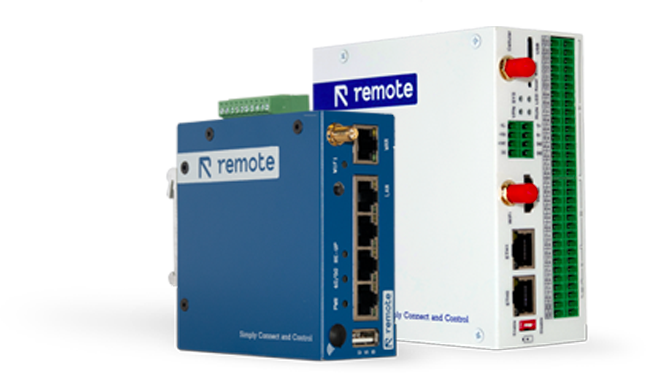
For machine builders looking to optimize OPC UA integration, we offer specific solutions for machine builders. We help design and implement secure, reliable, and efficient communication architectures. We are also ready to assist with integrating advanced hardware such as Edge Controllers.
Conclusion: build reliable and secure machines with OPC UA
Correctly implementing OPC UA is essential for modern machine builders. By focusing on security, data integrity, structured data models, and performance, you create machines that are ready for the future of the industry. Partner with experts to leverage the full potential of OPC UA.