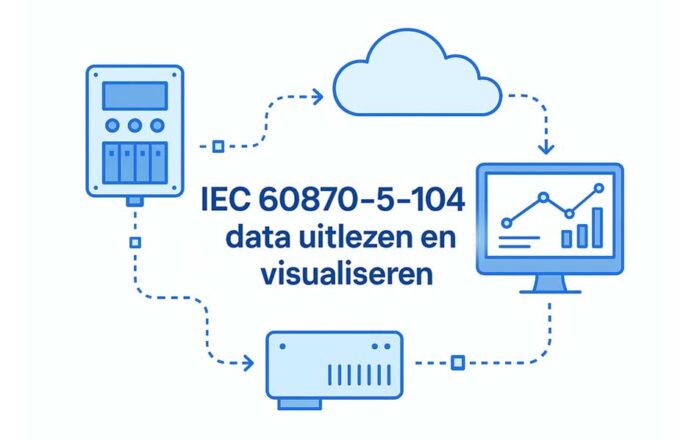



Industrial-Remote Connectivity Datalogging Infrastructure

Industrial-Remote Connectivity Datalogging Infrastructure is essential for teams requiring secure remote access and reliable datalogging across PLCs, legacy serial port devices, and modern IIoT stacks. In this article, we explain a practical, step-by-step HOW-TO that covers technical details such as Modbus, OPC-UA, MQTT, event handling, and Siemens S7 integration, based on Remote Engineer’s experience and engineering values.
Industrial-Remote Connectivity Datalogging Infrastructure: What to Aim For
Start by defining objectives: reduce on-site visits with secure remote access, capture deterministic datalogging for analysis, and bridge legacy equipment with serial port adapters or protocol converters. Our pragmatic approach focuses on reliability, security, and maintainability. Key protocols you will encounter include Modbus for many older PLCs, OPC-UA for structured data exchange, and MQTT for lightweight telemetry and event distribution.
Industrial-Remote Connectivity Datalogging Infrastructure: a Concise HOW-TO
Below is a practical framework — a proven sequence we use at Remote Engineer for client projects. Consider it an implementable checklist rather than abstract theory.
- Assess resources and constraints. Inventory PLC types (Siemens S7, others), serial devices, and network topology. Identify legacy endpoints without native Ethernet or OPC-UA support. Note event requirements: which alarms, counters, or HMI actions should trigger datalogging or remote attention.
- Choose hardware that bridges legacy and modern stacks. For serial devices, use robust serial-to-Ethernet gateways; for PLCs without OPC-UA, use protocol gateways supporting Modbus or native Siemens protocols. Our own devices combine hardened VPN-capable remote access with local protocol adapters to keep configuration centralized and secure.
- Design a datalogging strategy. Define sampling frequency, event-driven versus polling methods, and storage. For high-frequency signals, use edge buffering; for events, rely on event-driven MQTT publications or OPC-UA subscriptions. Datalogging must capture timestamps and contextual metadata (device ID, sampling source) to support later analysis.
- Implement secure remote access. Use segmented networks, least-privilege access rights, and hardware-supported VPNs. Ensure remote sessions with PLCs and HMIs do not expose control ports directly to the internet. Our solutions combine secure remote access with event logging, making every remote action auditable.
- Map protocols and implement converters. Map PLC tags to Modbus registers or OPC-UA nodes; apply serial drivers for legacy devices where necessary. For Siemens S7, prefer native protocol handlers or OPC-UA wrappers to preserve semantics. When integrating MQTT, define topics and QoS policies for reliable event delivery.
- Edge logic and events. Implement local filtering to forward only relevant events (alarms, status changes). Use edge rules to transform raw PLC variables into event objects — this reduces bandwidth and accelerates remote troubleshooting.
- Test, verify, and document. Validate datalogging integrity (no gaps), verify latency for remote access, and execute failure scenarios (network outage, PLC restart). Document mapping tables, serial pinouts, and event definitions so your team can maintain the configuration.
- Monitor and maintain. Perform health checks for device connectivity, datalogging consistency, and event delivery. Schedule firmware and configuration updates with rollback capabilities to prevent disruptions.
Protocol handbook: Modbus, OPC-UA, MQTT, and serial port
Modbus remains common in many legacy installations; it’s simple but requires disciplined addressing and polling rules to avoid bus congestion. OPC-UA offers a richer, type-safe model suitable for multi-vendor data. MQTT is ideal for event-driven telemetry and scalable cloud ingestion. For serial port connections, ensure proper baud rate, parity, and flow control, and use industrial converters that preserve timing and error reporting.
Practical Notes for Siemens S7 and PLC Integration
Siemens S7 devices often benefit from dedicated protocol modules or OPC-UA servers to expose structured tags. When direct S7 coupling is required, implement connection pooling and conservative read/write patterns to avoid impacting PLC cycle times. Capture events (alarms, mode changes) close to the source and publish them via MQTT or OPC-UA subscriptions, depending on your architecture.
Security, Compliance, and Trust
Security should not be an afterthought. Use network segmentation, mutual authentication, encrypted tunnels, and role-based access control for remote sessions. Maintain audit logs of all remote activities and datalogging exports. These steps build trust with customers and production teams — values that Remote Engineer has prioritized from the beginning.
Why Remote Engineer’s Approach Works
We are pragmatic problem solvers: each project starts with a conversation to capture requirements and constraints. We then design a total solution often combining our own hardware and software. Since our first remote machine project in 2008, we’ve refined patterns for bridging legacy serial endpoints, integrating PLCs including Siemens S7, and providing secure remote access coupled with reliable datalogging. Our small, expert team values short lines of communication and rapid delivery, helping customers move quickly from pilot to production.
Next Steps and where to Find Help
If you need a customized implementation plan: 1) map your PLCs and legacy devices, 2) define datalogging and event needs, and 3) choose a phased rollout with monitoring. For hands-on support and tested hardware/software solutions, visit our site and review case studies:
By following the framework above, you’ll achieve secure remote access, robust datalogging, and smooth integration between Modbus, OPC-UA, MQTT, and legacy serial systems — all with an emphasis on achievable, auditable solutions rather than ad-hoc fixes.